Both frameless and semi-frameless shower doors offer a clean, modern look, but they differ in design, cost, and functionality. Here’s what to know before choosing the right option for your bathroom.
Written by Harmony Glass
Updated Aug 28, 2026
8 min read
The Short Answer
Frameless and semi-frameless shower doors differ primarily in how the glass is supported. Frameless enclosures rely on heavier tempered glass, hinges, clips and minimal structural hardware rather than a continuous perimeter frame. Semi-frameless systems retain framing or channels around portions of the enclosure while leaving other glass edges exposed. Frameless typically offers greater design flexibility and a more open appearance, while semi-frameless can achieve a similar glass-forward look with more structural framing and, depending on the configuration, a lower overall project cost.
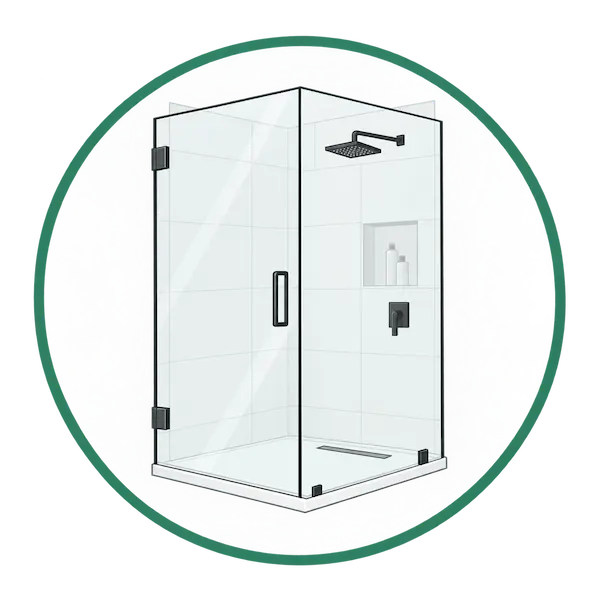
Frameless is generally better for:
• A premium, modern look
• Maximum customization
• Open and spacious bathrooms
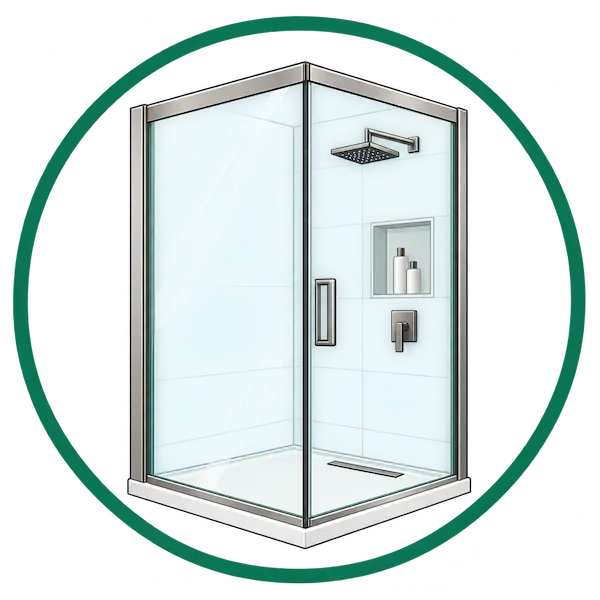
Semi-frameless is generally better for:
• Budget-conscious projects
• Standard layouts
• Homeowners who prefer a bit more structure
Frameless shower doors are custom glass enclosures designed without a continuous metal frame surrounding the glass. Instead, the enclosure typically uses heavy tempered glass secured with wall-mounted hinges, glass-to-glass hinges, clips and other minimal hardware. Most custom frameless systems use 3/8-inch or 1/2-inch tempered glass, giving the panels enough rigidity to function without the perimeter framing used in lighter shower-door systems.
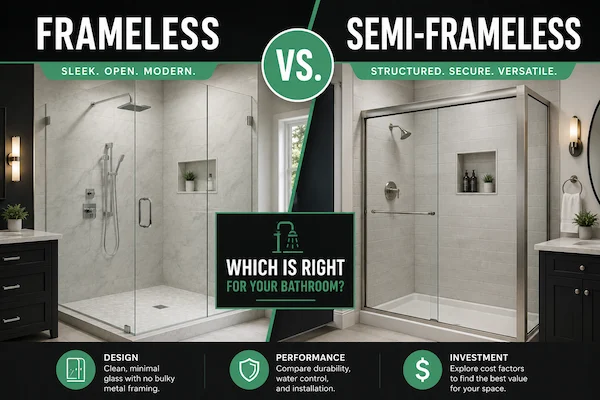
Frameless Shower Door
Semi-Frameless Shower Door
Semi-frameless shower doors combine exposed glass edges with selective metal framing or channels that help support the enclosure. Unlike a fully framed system, metal does not surround every edge of every glass panel. Depending on the product and configuration, framing may be used along the perimeter, fixed panels, sill or header while the operating door retains a cleaner, largely frameless appearance.
| Feature | Frameless | Semi-Frameless |
|---|---|---|
| Glass Thickness | 3/8" – 1/2" | 1/4" – 3/8" |
| Framing | Minimal hardware | Partial framing |
| Appearance | Sleek, modern, open | Clean, with more structure |
| Customization | High | Moderate |
| Cost Position | Generally higher | Generally lower |
| Maintenance | Fewer frame channels to clean | More framing to clean |
| Best For | Luxury, custom designs | Budget-conscious, standard layouts |
Not Sure which is right?
Let’s Find the Best Fit for Your Shower
Our team can assess your space, style, and budget to recommend the best solution for your bathroom.
Custom Solutions
Expert Installation
5 Year Warranty
Frameless Shower Doors
Minimal, glass-forward designs
Showcases your tile and bathroom design
Highly customizable (sizes, layouts, hardware)
Fewer metal channels and edges to clean
Often higher cost for comparable configurations
Requires precise measurements and installation
Semi-Frameless Shower Doors
Clean, glass-forward appearance
Added support and structure
Often lower cost for comparable configurations
Works well for standard layouts
More visible framing
Harder to clean
Choosing between frameless and semi-frameless shower doors depends on your shower layout, design preferences, available mounting surfaces, and budget. Frameless systems are often preferred for minimal, highly customized designs, while semi-frameless enclosures use selective framing for added support while maintaining an open glass appearance. The right choice ultimately depends on both the look you want and the conditions of your shower opening.
A shower opening is rarely as simple as it looks. Wall alignment, uneven tile, curb conditions, door clearance, and available mounting points can all affect how an enclosure should be designed. Professional measurement before fabrication allows the glass and hardware to be configured around the actual finished opening rather than assuming the space is perfectly square.
Frequently Asked Questions
Still deciding between frameless and semi-frameless shower doors? Here are answers to common questions about cost, durability, maintenance, installation, and choosing the right option for your bathroom.
Generally, yes. Frameless shower doors typically cost more because they use thicker glass, heavier hardware, and require more precise measurements and installation. Semi-frameless doors use some structural framing, which can make them a more budget-friendly option while still providing a clean, modern appearance.
Both can provide a durable, long-lasting enclosure when properly installed. Frameless shower doors typically use thicker tempered glass because there is less framing to support the enclosure, while semi-frameless systems use a combination of tempered glass and metal framing for structural support.
Frameless shower doors are generally easier to clean because they have fewer metal frames and channels where soap residue, mineral deposits, and moisture can collect. Semi-frameless doors require some additional cleaning around their tracks and framing.
Not every shower is automatically suited for a frameless enclosure. The shower layout, wall and tile conditions, structural support, door clearance, and available mounting surfaces all need to be evaluated before choosing a frameless shower door.
Choose frameless if you want a minimal, open appearance with thicker glass and greater customization. Semi-frameless is a strong option if you want a modern glass enclosure at a lower overall cost. The best choice ultimately depends on your shower layout, design preferences, and budget.
Frameless shower doors are designed to keep water contained without relying on extensive metal framing. Proper measurements, glass placement, seals, and door positioning are important for controlling water. Certain shower layouts may benefit from additional seals or strategically placed panels to reduce splash.
Both frameless and semi-frameless shower doors can last for many years with proper installation and routine care. The lifespan depends on the quality of the glass and hardware, installation, usage, and maintenance. Frameless systems also have fewer framed channels and components that can experience buildup or wear over time.
Explore Resources
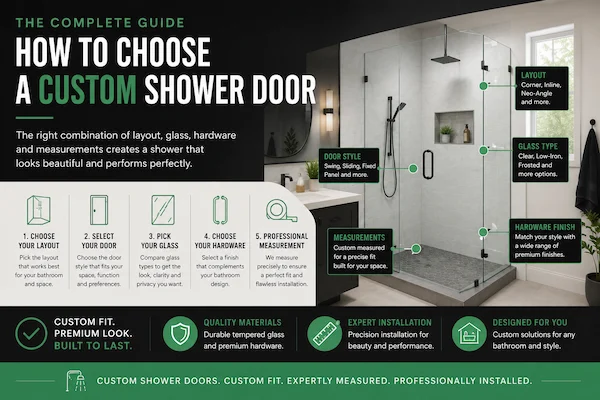
How to Choose a Custom Shower Door
Explore shower layouts, door styles, glass types, hardware, and measurements to help you choose the right custom shower door for your bathroom.
Clear vs. Low-Iron Shower Glass
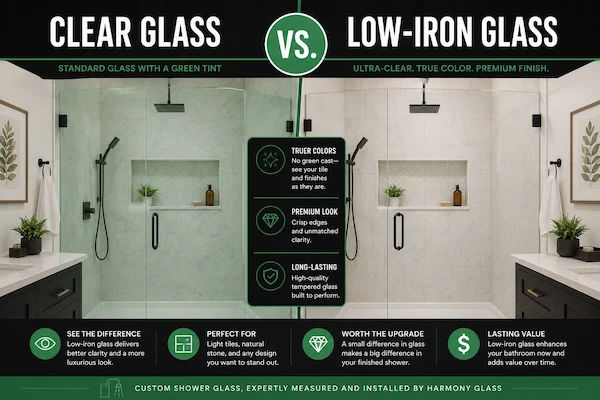
Learn the differences between clear and low-iron shower glass, including color clarity, green tint, appearance, and when upgrading to low-iron glass is worth it.
How to Prepare for a Shower Door Install
Compare frameless and semi-frameless shower doors including design, hardware, glass, maintenance, and cost to find the best fit for your bathroom.

Your Vision.
Our Craft.
Pure Harmony.

Powered & Designed by PeytonJonesSEO © 2025