How Mirror Size Impacts the Room
Mirror size plays a major role in balance and proportion. A mirror that’s too small can feel disconnected, while one that’s oversized can overwhelm the space if not properly placed.
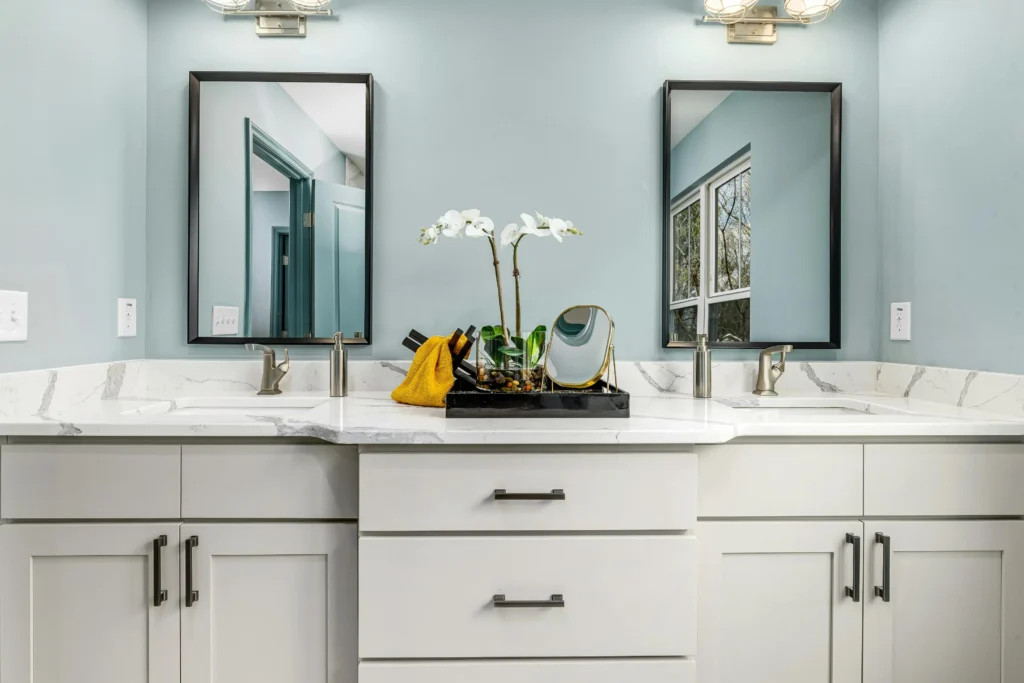
In bathrooms, mirrors are typically sized to match or slightly undersize the vanity width. In living areas, larger mirrors are often used intentionally to reflect light and visually expand the room.
Framed vs. Frameless Mirrors
Framed mirrors introduce texture and style, helping tie the mirror into surrounding finishes like cabinetry or fixtures. Frameless mirrors offer a clean, modern look that works well in minimalist or contemporary spaces.
The choice often comes down to the design language of the room and how much visual presence you want the mirror to have.
Things To Consider
Placement and Lighting Considerations
Where a mirror is installed matters just as much as the mirror itself. Height, surrounding lighting, and wall conditions all affect usability and appearance.
Proper placement ensures the mirror reflects light evenly and serves its purpose without glare or awkward sightlines.
When Custom Mirrors Make Sense
Custom mirrors are ideal when standard sizes don’t fit the space or when design requirements call for something more specific. They allow for precise sizing, unique shapes, and clean integration into the room.
In many cases, custom work provides a better long-term result than forcing a stock mirror into place.