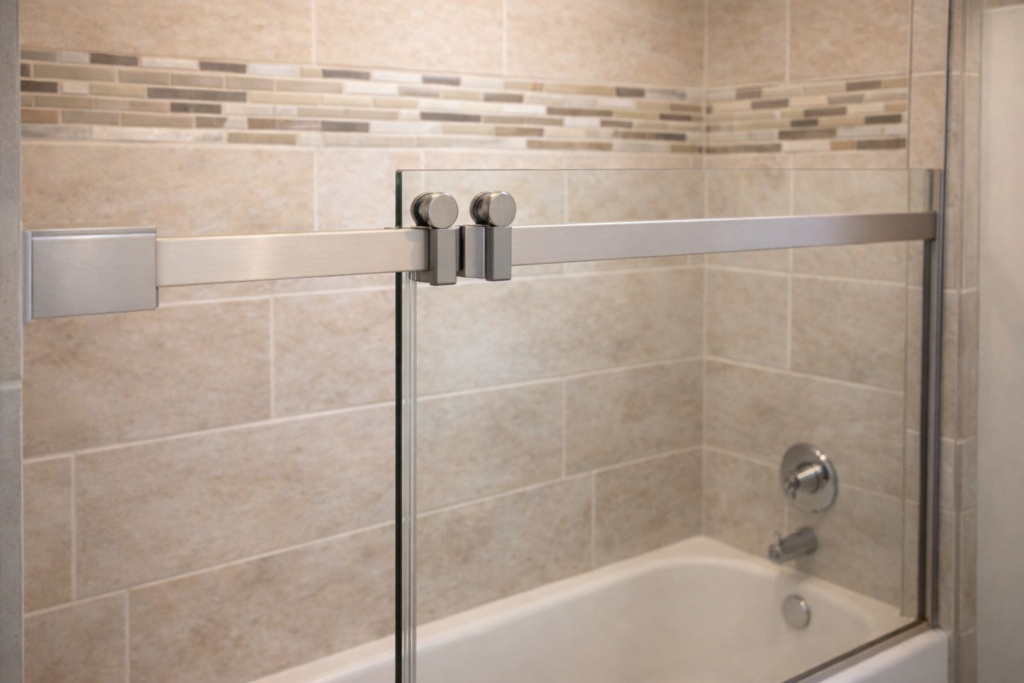
What Defines a Frameless Shower Door?
Frameless shower doors are made from thick, tempered glass and rely on minimal hardware for support. There is no metal framing around the perimeter of the glass, which creates a seamless, open look that highlights tile work and natural light.
Because of the heavier glass and precise installation required, frameless doors tend to feel more luxurious and custom. They’re especially popular in modern bathrooms and smaller spaces where visual openness makes a noticeable difference.
How Semi-Frameless Shower Doors Differ
Semi-frameless shower doors use similar glass panels but include light framing along select edges, such as the wall or base. This added structure provides support while still maintaining a sleek appearance.
For homeowners who want a modern upgrade without the full cost of frameless glass, semi-frameless doors strike a solid balance between aesthetics and practicality.
The best choice depends on your budget, bathroom layout, and style goals. Frameless doors deliver maximum visual impact, while semi-frameless doors offer durability and value with a slightly more traditional feel.
Both options can significantly improve the look and function of a bathroom when properly installed.
How to Keep Glass Shower Doors Clean and Clear Long-Term
Glass shower doors add elegance to any bathroom, but they also tend to highlight water spots, soap residue, and mineral buildup. Without a simple maintenance routine, even new glass can start to look cloudy over time.
Fortunately, keeping your shower doors clean doesn’t require expensive products or constant effort.
Daily Habits That Prevent Buildup
A quick squeegee pass after each shower helps remove excess water before it has a chance to dry and leave spots behind. This single habit dramatically reduces the need for heavy cleaning later.
Leaving the shower door open for ventilation also helps moisture evaporate more quickly, limiting mildew and residue.
Safe and Effective Cleaning Methods
For weekly cleaning, mild solutions like diluted vinegar or gentle glass cleaners work well. These remove buildup without damaging the glass or hardware finishes.
Avoid abrasive pads or harsh chemicals, which can scratch the glass surface and weaken protective coatings over time.
Long-Term Protection and Maintenance Tips
Many homeowners choose protective glass coatings that repel water and reduce staining. While optional, these treatments can extend the clarity of your shower doors and make cleaning even easier.
Consistent light maintenance always beats infrequent deep cleaning.